Fleet Charging
Diesel vs electric vans: the real cost per mile
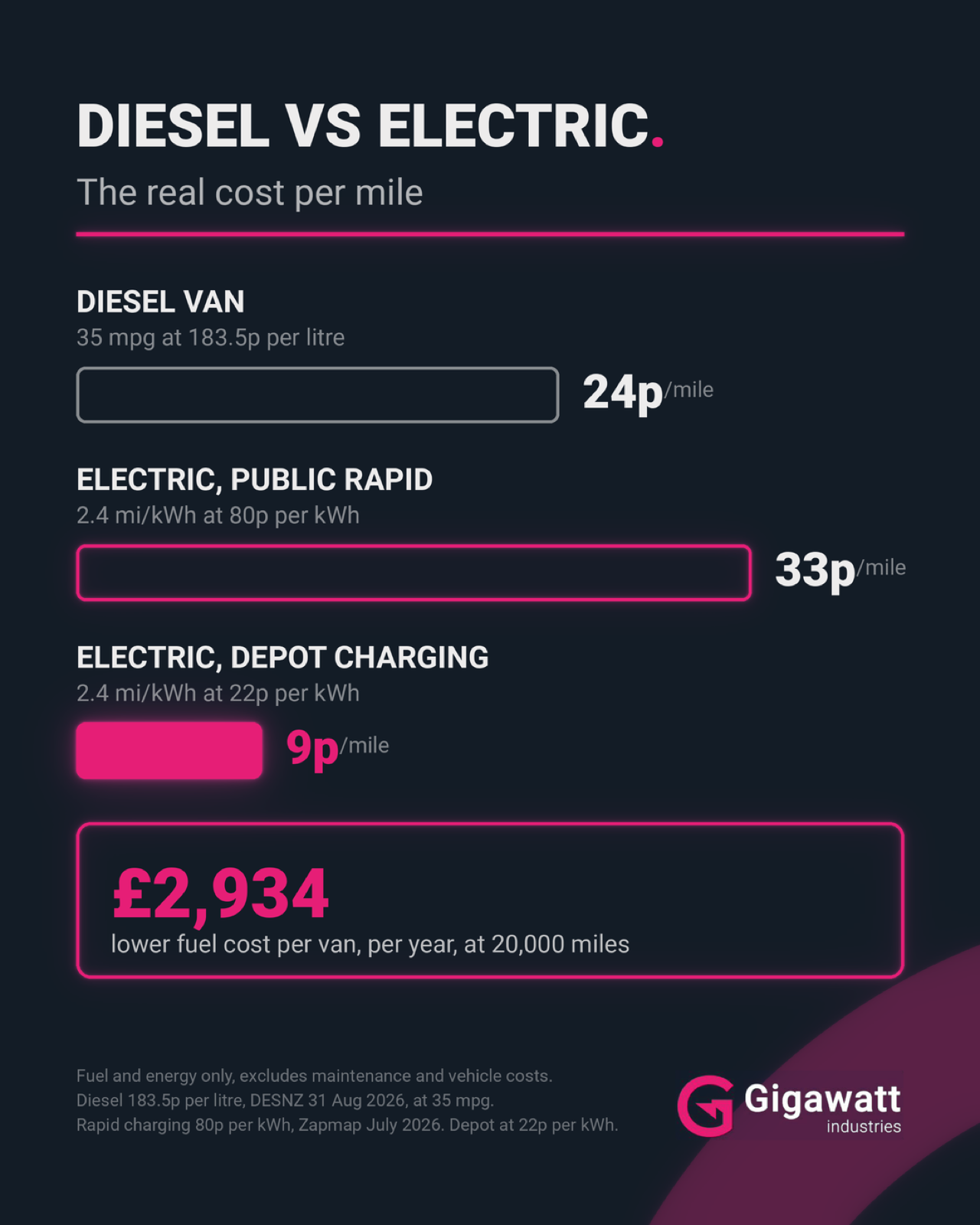
An electric van charged overnight at your depot works out at around 9p per mile in energy. Charge that same van on the public rapid network and it rises to around 33p per mile, well above the 24p a diesel van costs to fuel.
So is an electric van cheaper to run than a diesel? It can be considerably cheaper. But where you charge it matters.
The headline numbers
On a van doing 2.4 miles per kWh, against a diesel returning 35mpg:
- Diesel van: about 24p a mile, at 183.5p a litre (DESNZ, 31 August 2026).
- Electric on public rapid: about 33p a mile, at 80p per kWh (Zapmap, July 2026).
- Electric charged at the depot: about 9p a mile, at 22p per kWh.
Slower public charging sits between the two, and a business electricity rate lands nearer the depot figure than the rapid one.
This is why comparing diesel with electric without talking about charging can give you a misleading answer. An electric van charged cheaply at its depot looks very different financially from one relying heavily on the public rapid network. On these figures, the rapid-charged van is the most expensive of the three to run.

What does that mean over a year?
Take a van travelling 20,000 miles a year. The difference between fuelling it with diesel and charging it at your own depot is about £2,934 per van, per year, in energy alone.
Multiply that across 20, 50 or 100 vehicles and it's easy to see why charging strategy matters to the fleet business case. Fuel and energy only, though: this excludes maintenance and the cost of the vehicles themselves.
But electric vans can cost more to buy
They can. And that needs to be part of the comparison.
Looking only at energy cost and declaring electric the winner would be just as misleading as looking only at the purchase price and declaring diesel cheaper. The real question is what the vehicle costs your business over the time you own it. That is its total cost of ownership.
Energy is only part of that calculation
Electric vans can also have lower maintenance costs, because there are fewer moving parts and fewer familiar diesel service items. But other costs and savings can affect the picture too. A proper comparison could include:
- The purchase price.
- Energy or fuel.
- Maintenance.
- Available grants.
- Tax treatment.
- Clean-air-zone charges where relevant.
- How many years you expect to operate the vehicle.
The answer can also vary significantly from one part of the fleet to another. A high-mileage van returning to the depot every night could build a very different business case from a low-mileage vehicle that depends heavily on public charging.
Which is why the question should not necessarily be "should we replace the fleet with electric vans?" A more useful starting point is "which of our vans make financial and operational sense to switch first?"
The van still has to do the job
The cheapest cost per mile is irrelevant if the vehicle can't complete its route. Real-world range, payload, daily mileage and charging time all need to work for the operation.
That's particularly important with electric vans, because official range figures don't necessarily reflect the range of a working vehicle carrying a real load.
So total cost of ownership and operational suitability need to be considered together. Cost per mile tells you what happens on the road. Total cost of ownership tells you whether the vehicle makes financial sense. And fleet data tells you whether it can actually do the job.
Want to see the bigger business case?
If you already know which vehicles you are considering, book a free site charging assessment and our team will come back with what your site can support, the power you will need, a realistic programme and a ballpark cost. Grants and tax relief can change the up-front side of the sum too.
Fleet charging
Want to know more?
See what your fleet could save, and what your site can support.
Fleet charging