Grid Connections & ICP
What You Need to Know: EV & Grid Connection Jargon, Explained

Every EV charging project comes with its own language, ICP, IDNO, DNO, kVA, contestable works. Miss what one of them means and a straightforward job can start to sound impossible to plan.
I’m Denym, and translating this stuff for clients is most of my week. So here’s the plain-English version: the terms you’ll actually meet on a project, what each one means, and the part that matters, why it changes how your programme runs.

Installing the chargers is the easy part. The grid connection is where projects live or die.
Who’s who
ICP - Independent Connection Provider
An accredited company that designs and builds the competitive (“contestable”) parts of a new grid connection, working alongside the DNO to get a site safely energised.
Why it matters: put a specialist ICP like Gigawatt in charge of the connection and you often turn a queue into a delivery date.
IDNO - Independent Distribution Network Operator
An Ofgem-licensed network operator that owns, operates and maintains the electricity network on a site, an alternative to those assets passing to the regional DNO. Unlike DNOs, IDNOs aren’t tied to a region and operate anywhere in Great Britain, with their networks connecting into the wider grid, usually via the local DNO. An ICP builds the network and an IDNO adopts it on energisation.
Why it matters: IDNOs compete to adopt new networks and pay an asset value for them, recovering their investment through ongoing network charges. That upfront payment can offset connection costs and sharpen a project’s commercial case.
DNO - Distribution Network Operator
The company that owns the regional electricity network, the poles, cables and substations in your area. Six company groups cover fourteen licensed regions across Great Britain, each a regulated regional monopoly.
Why it matters: Every connection ultimately depends on the local DNO, whether an ICP does the contestable work or not.
CPO - Charge Point Operator
The business that owns and runs the charge points, hardware, back-office software, pricing and maintenance.
Why it matters: CPOs are usually the ones commissioning the connections and installs we deliver.
NESO - National Energy System Operator
The public body that plans Great Britain’s whole energy system and operates the electricity grid in real time, managing the queue for transmission-level connections. Most charging projects connect at distribution level, where the DNO runs the queue.
Why it matters: NESO sits at the centre of the reforms reshaping how both the transmission and distribution connection queues work, aimed at clearing today’s backlogs.
Ofgem - the energy regulator
Great Britain’s independent energy regulator, setting the rules networks and suppliers have to follow.
Why it matters: Its decisions shape the timescales, costs and competition every connection has to work within.
Getting connected
Grid connection
The physical and contractual link between a site and the electricity network that powers it, from the capacity agreement and design through to cabling and the final connection.
Why it matters: It’s usually the longest-lead, highest-risk part of a charging project, plan it first, not last.
Point of connection - POC
The exact spot where your new installation joins the existing network.
Why it matters: It sets the cable route, length and cost, pinning it down early is one of the biggest wins for your programme.
Contestable & non-contestable works
Contestable is the work an ICP can competitively deliver, cabling, ducting, substations, site infrastructure. Non-contestable is the bit only the DNO can do, like the final tie-in to the live network.
Why it matters: Splitting the work this way is exactly how an ICP speeds delivery up and hands you more control.
Capacity - kVA
The maximum power your connection is allowed to draw, measured in kilovolt-amperes (kVA).
Why it matters: It caps how many chargers can run at full power at once, the single most important number on the project.
Reinforcement
Upgrading existing cables, transformers or substations to carry the extra load you’re adding.
Why it matters: Where the local network is already full, reinforcement can be the biggest cost and longest wait, so check capacity early.
Energisation
The moment the finished connection goes live and power flows for the first time.
Why it matters: Nothing opens to drivers until energisation, so its date tends to drive the whole programme.
Adoption
When a DNO or IDNO formally takes ownership of the new network assets and maintains them long-term.
Why it matters: A connection isn’t truly finished until the assets are adopted and signed off.
Power & units
AC charging
Supplies power in the same form as the grid and lets the vehicle convert it, typically 7–22kW.
Why it matters: cheaper to install and ideal where vehicles sit for hours, workplaces, destinations and overnight depots.
DC charging - rapid & ultra-rapid
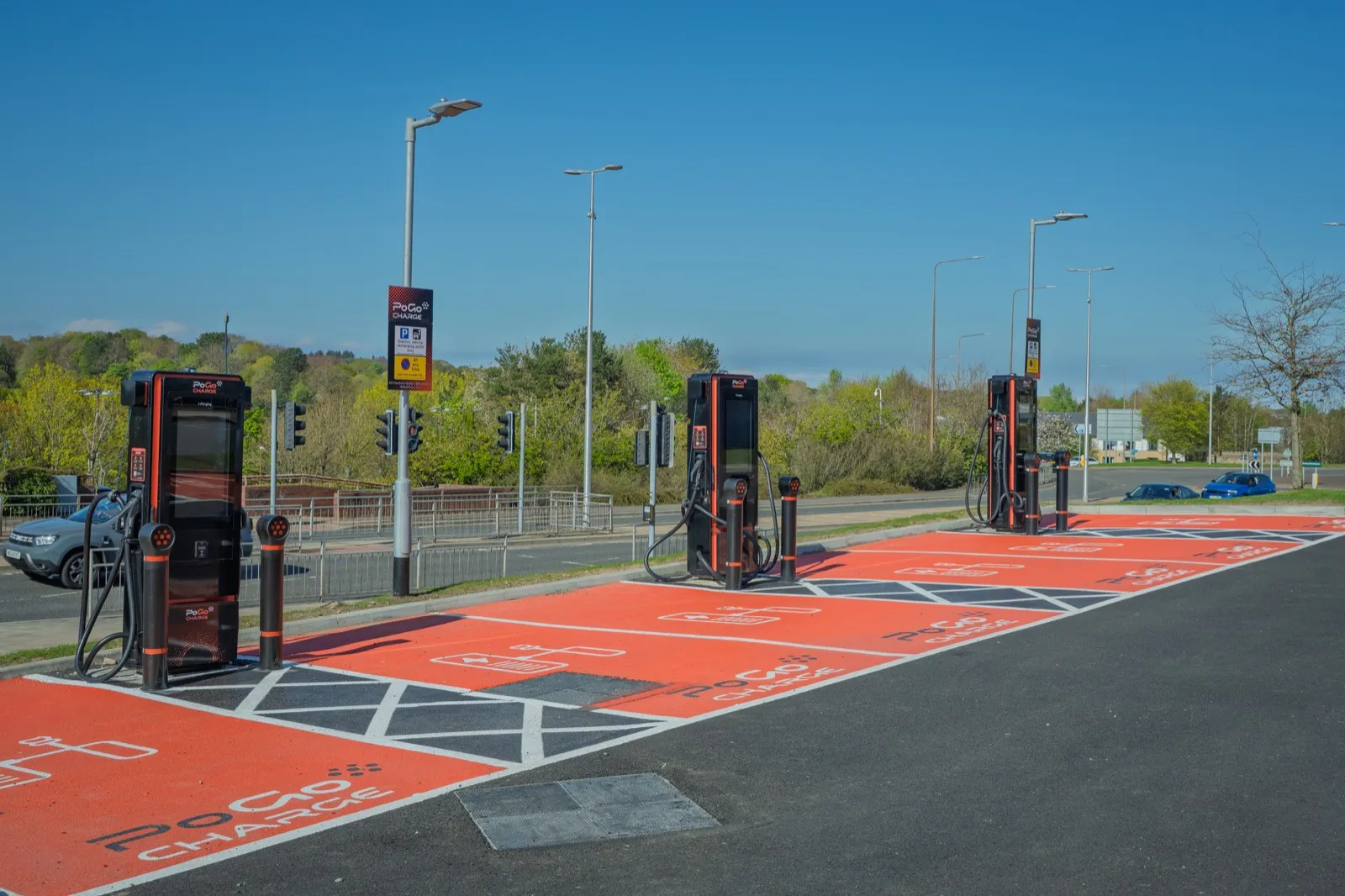
Converts power to DC inside the charger and feeds it straight to the battery, from 50kW up to 350kW and beyond.
Why it matters: Fast for drivers, but the big electrical load makes the grid connection the defining challenge of most DC hubs.
kW vs kWh
A kilowatt (kW) is the rate power is delivered; a kilowatt-hour (kWh) is the total energy used over time. A 50kW charger running for an hour transfers 50kWh.
Why it matters: Chargers are rated in kW (how fast they charge); bills and batteries are in kWh (how much is used or stored).
HV & LV - high & low voltage
LV (400V/230V) is everyday delivery voltage; HV (usually 11kV) carries bigger loads more efficiently over distance.
Why it matters: Larger hubs need an HV connection and their own substation, a bigger, longer job than a simple LV supply.
Three-phase power
Delivers electricity over three live conductors instead of one, carrying far more power for a given cable size.
Why it matters: It’s essential for higher-power charging, so “is the site three-phase?” is one of the first questions we ask.
Half-hourly metering - HH
Records a site’s electricity use in 30-minute intervals. Long mandatory for larger supplies, and now becoming standard for all sites as the industry moves to market-wide half-hourly settlement.
Why it matters: It unlocks time-of-use tariffs, which is what makes smart charging actually pay.
Load management - smart charging
Software that shares and shifts power across chargers so a site never exceeds its capacity.
Why it matters: It lets you fit more charge points on the same connection and dodge costly capacity upgrades.
The kit & the groundwork
Substation
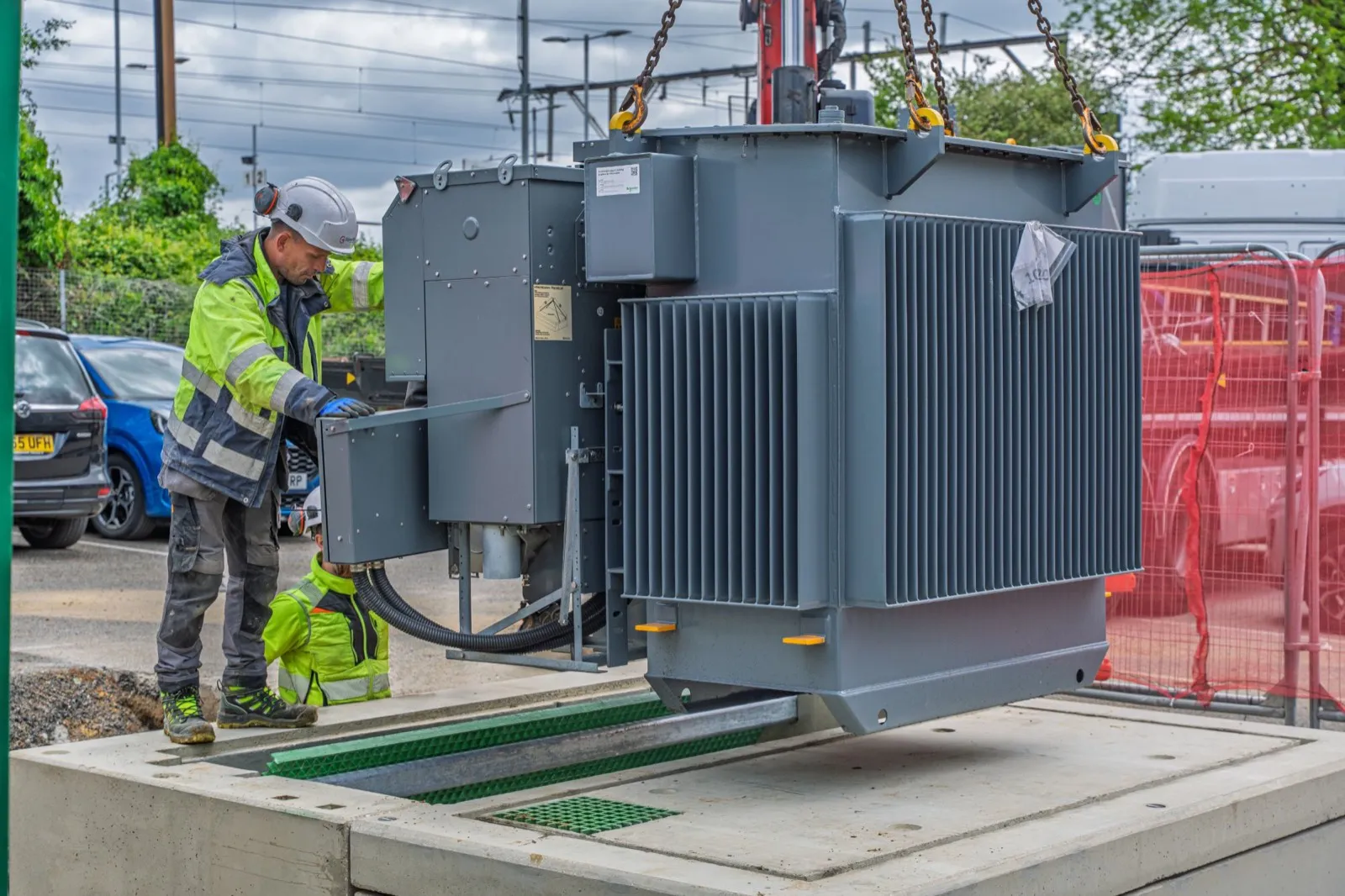
Houses the transformers and switchgear that step voltage up or down and distribute it safely.
Why it matters: High-power hubs need their own, often a critical-path item to design, procure and install.
Feeder pillar
A street-level cabinet that splits one incoming supply out to multiple charger circuits.
Why it matters: A cost-effective way to feed a whole car park of chargers from a single connection.
Streetworks & permitting
Digging in the public highway, say, to lay a cable, and getting highway-authority approval to do it.
Why it matters: Permits, traffic management and notice periods all take time, a common but avoidable source of delay.
Wayleave & easement
Legal rights to install and access electrical kit on someone else’s land (an easement is the permanent version).
Why it matters: If your cable route crosses third-party land, securing these early keeps energisation on track.
That’s the jargon that trips most projects up. Get these straight and a grid connection stops feeling like a black box, and if you want a straight answer on how any of it applies to your site, just ask.
EV infrastructure
Planning a project?
Talk to us about design, grid connections, and delivery.
Get in touch